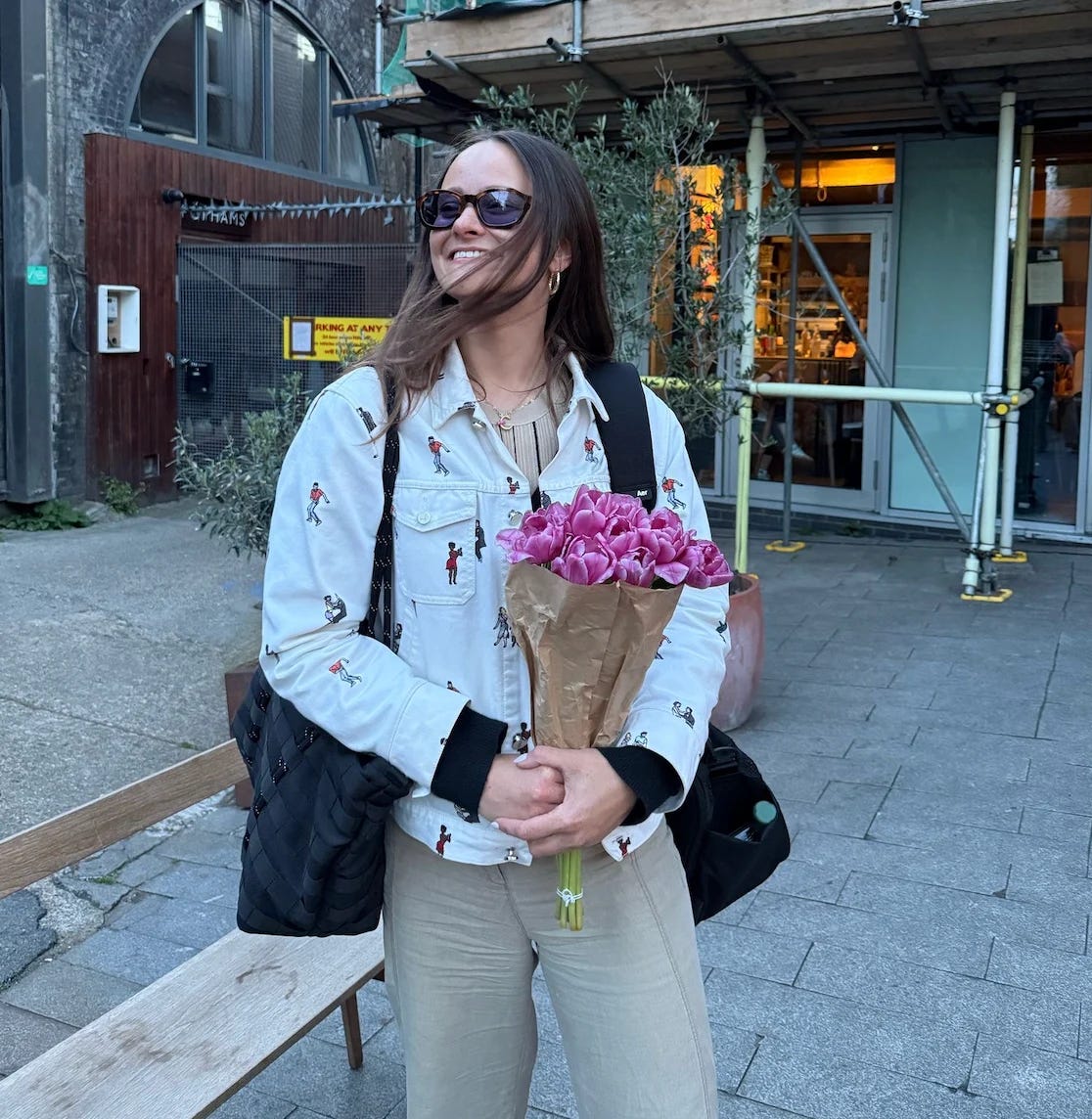
Charlotte Rubesa is a London-based communications strategy director and the creator and editor of Quiet Media.
What is Quiet Media?
Quiet Media is a print-first publication founded on the idea that our attention is our most valuable resource and it should be handled with care. Everyone says we’re losing our attention spans, but that framing makes it sound sudden and inevitable - like something that just happened to us. Really though, attention isn’t randomly “lost” - it’s shaped by the platforms we build and spend time on, the incentives we reward, and the speed we’ve learned to accept as normal. Quiet Media brings together writers, strategists, artists and founders who are questioning those systems and our relationship to them, offering truly wonderful alternatives. The zine moves between essays, interviews and shorter reflections, asking what happens when we value depth > speed, and thoughtful creation > endless output. It also looks at the role brands can play in this, exploring how products and services might be built differently if not simply following the rules set by Big Tech.
Then, a bit of a work in progress, but I’m also defining Quiet Media as a media format that respects attention: print, apps that allow you to dive deeply into your passions, podcasts. One of the characteristics is the absence of constant notifications, the infinite scroll and artificial urgency.. I’m excited to build that out.
Why did you start it?
In my day job I work as a communications strategist, essentially building plans for brands on how ideas travel and reach the audiences they’re meant for. That means I’ve had a front row seat to how quickly the media landscape has changed.. Social media used to be a fairly reliable channel. It gave us a direct connection with our audience and allowed for organic discovery. If you had 10,000 followers, maybe 80-85% of them would see what you posted and be likely to engage. Over time, it has matured into a professionalised industry and that sense of possibility has warped. Today your visibility is mediated by platforms and the algorithms they design, which results in a culture where we are constantly encouraged to optimise, to chase relevance and “hack” systems, while sidelining those direct relationships. Attention becomes something to capture vs something to earn. I started Quiet Media to be a hopeful anthology of voices who are building a better future for media and culture. It’s not all doom and gloom. As much as this moment is defined by fatigue for these channels, it’s also the moment of recalibration on how we connect, share and create.
Who or what inspired you?
So much! In many ways this project is the overflow of input and inspiration - I couldn’t keep it all in my head anymore and wanted to share it with the world. A few things feel like early seeds of Quiet Media... First, simply living in London. Like many big cities now, you can’t avoid the constant presence of phones - people crossing the street while scrolling, or standing hunched over screens while waiting for coffee instead of acknowledging the fellow humans around them. This makes me sad for humanity sometimes. What are we doing?! Then, I did a course with Zine and the McLuhan Institute in 2024, which really opened my eyes to thinking differently about media and how it shapes our behavior. Through my work I started noticing examples of brands experimenting with more analogue / IRL formats - Heineken’s nudge to get people together, Polaroid’s OOH campaign, Miu Miu’s literary club. Karen Nelson-Field’s research on The Cost of Dull Media was also hugely influential while I was thinking about all this. Her work shows that brands are losing big money by pouring investment into platforms where people’s active attention is low.
Get your copy of the inaugural edition of Quiet Media.