What is Playhtml?
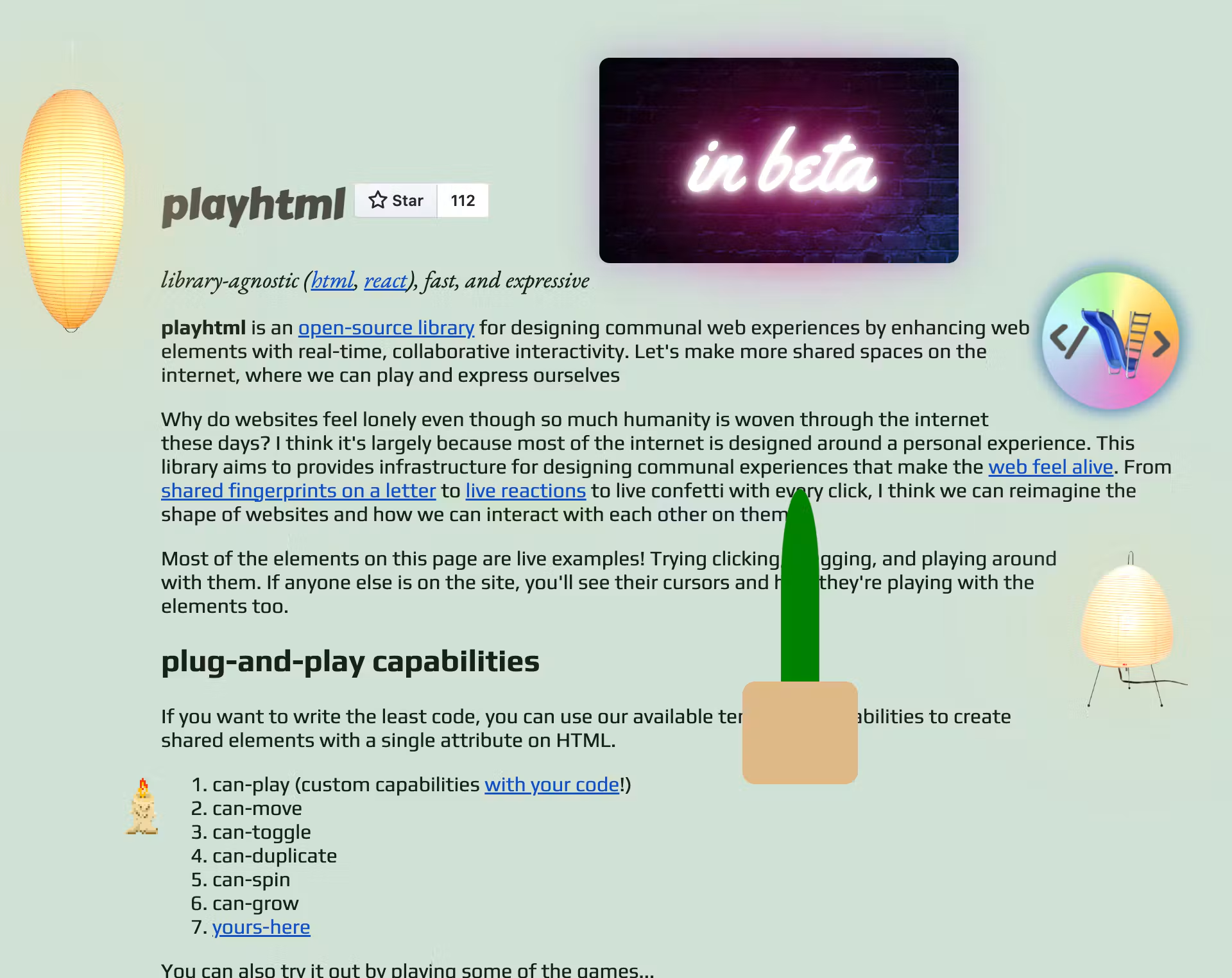
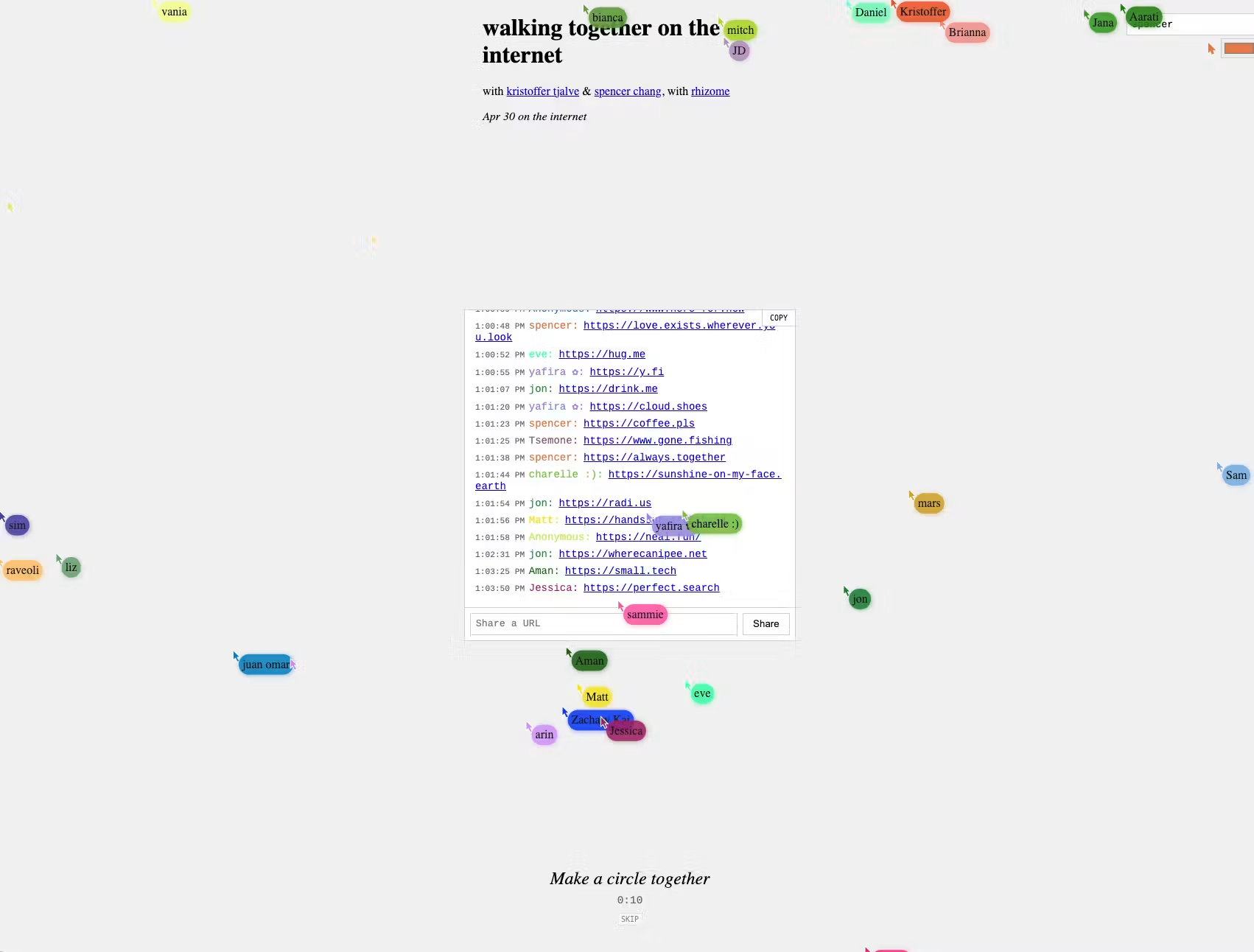
playhtml is an open-source tool for making websites that feel alive and shared by enhancing web elements with collaborative, persistent interactivity. Things that people do on a website happen in real-time for everyone else and the changes stay for others to find. You can even connect elements on different sites. For example, I have a favorite Noguchi lamp on my website that visitors can switch on and off for everyone, Keith and Isabel have stickers that visitors can rearrange, and Jacky has a departures board that shows people who have recently visited. Rather than a website restoring itself on every refresh, playhtml lets you make websites that grow with every person who has visited, like showing the traces of people who have clicked through links on Wikipedia.
The web was made to talk to someone else on the other side of the screen, but our online environments are increasingly moving away from this premise. Making websites feel inhabited may not optimise utility, but they make the space feel alive in an unquantifiable way, reminding us that there are other people who have been here, who you can learn about, run into, and maybe even become friends with. I think that’s important not only for the way it makes people feel as we browse but also how it enables the web to carry our collective history. Like marks of hands in a cave wall, stickers left on telephone poles, and stacks of rocks along trails, these traces of life show that the web is a human space, that we were online before.
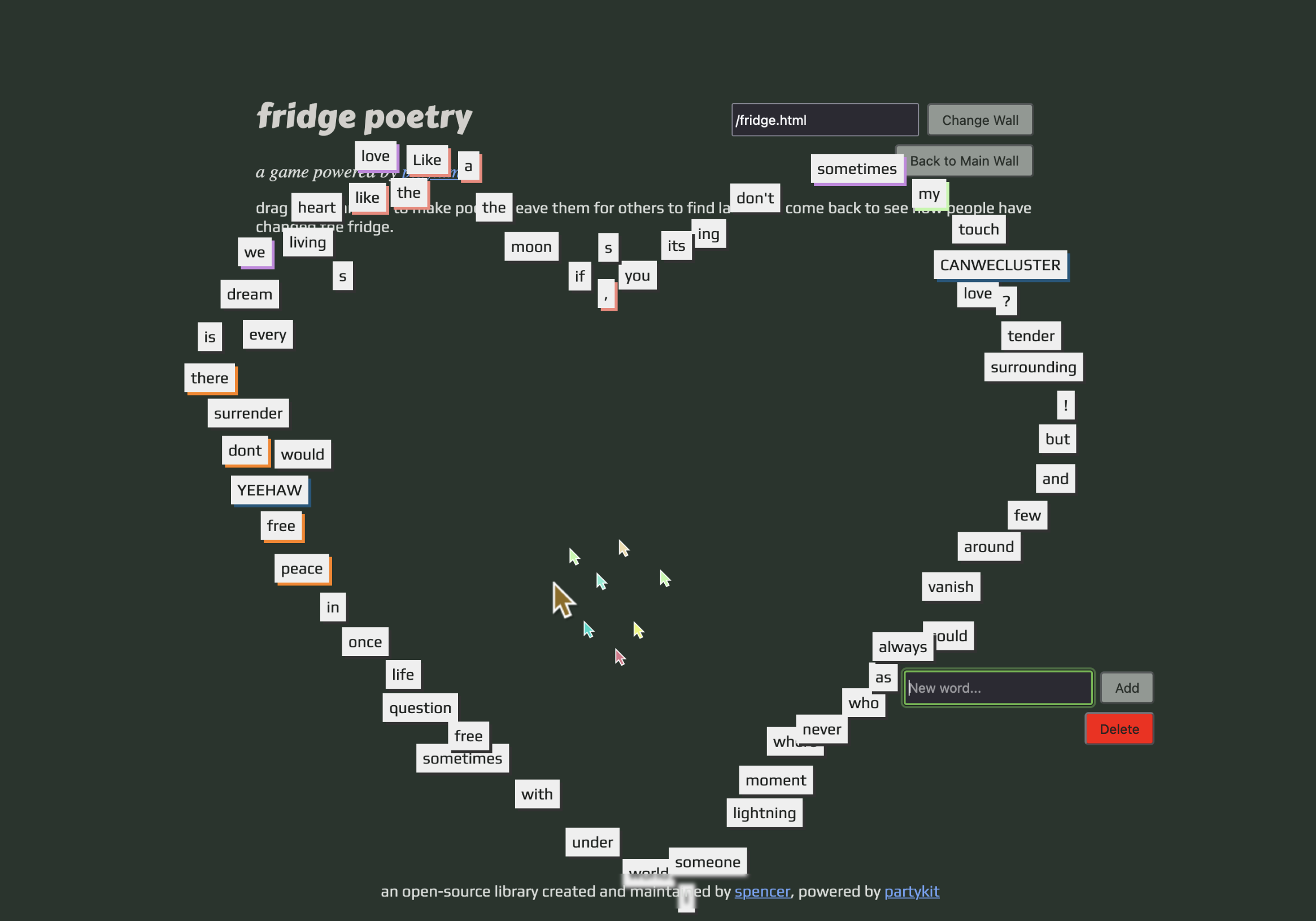
The website also hosts net.art I've made with it such as an open poetry wall, a shared sheet of grid paper, and a continuously colored website.

Why did you start it?
I grew up on the internet and love when it makes me feel more connected and empowered. My first time experiencing this was my first “programming” encounter in the level editor of Warcraft III, an online game I played, and I remember making the exact kind of game I wanted to play with my friends. I want the internet to feel as alive and shared as it feels to inhabit a city—people watching on park benches, sharing space in a subway or bus, and claiming a favorite spot at your cafe while becoming friends with the other regulars. There’s so many latent opportunities to relate to other people and their actions in the world.
So much of being online is binary—you're either invisibly scrolling or broadcasting your thoughts to everyone, which feels unnatural compared to these ambient forms of connection that happen automatically in the physical world. I started playhtml to expand this spectrum of relation. Normally, programming things like this require lots of technical infrastructure but I wanted anyone to be able to make their own.
How do you see it relate with web standards?
I think a lot about web standards because they define our default experience online. In many ways, playhtml is very jarring to our standard experience of the web because it challenges our normal assumptions that no one else will see the things we do on a website, unless we are “posting” to the world. This is the most common reaction I see when I first show people playhtml—there’s a second of processing before they realize that everything you do is happening for everyone else; that your actions have a lasting effect on the world.
My hope with playhtml is that it can inspire or become part of a future web or browser standard, oriented around making the web feel more like a public space and support the public good. In the same way JavaScript introduced a completely new level of interactivity and fun to the web, I hope we introduce a standard that makes it much more accessible to make the web feel more alive and interconnected.
How do I get started using some of your tools?
Here’s some ways that grow in level of involvement:
Try out some of the playhtml experiments and get an idea of what these kinds of spaces feel like. Reflect on what kinds of social spaces you want to exist on the web.
Download we were online to change your default experience of the web to be more social (an extension for now, in lieu of a new web standard to make this the default!).
Check out the playhtml docs to see how you can get started making a communal website (or adding onto an existing website). You can get started in as little as a single data attribute on elements and go as deep as creating your own custom interactions. See inspiration and other sites in the examples page.
If you want to go deep, Munus Shih and I taught a class about making websites with playhtml and published our entire syllabus. It walks through playhtml tutorials and talks deeper about the philosophy and values of the tool.
Have people started using the tools in unexpected ways? Maybe even malicious?
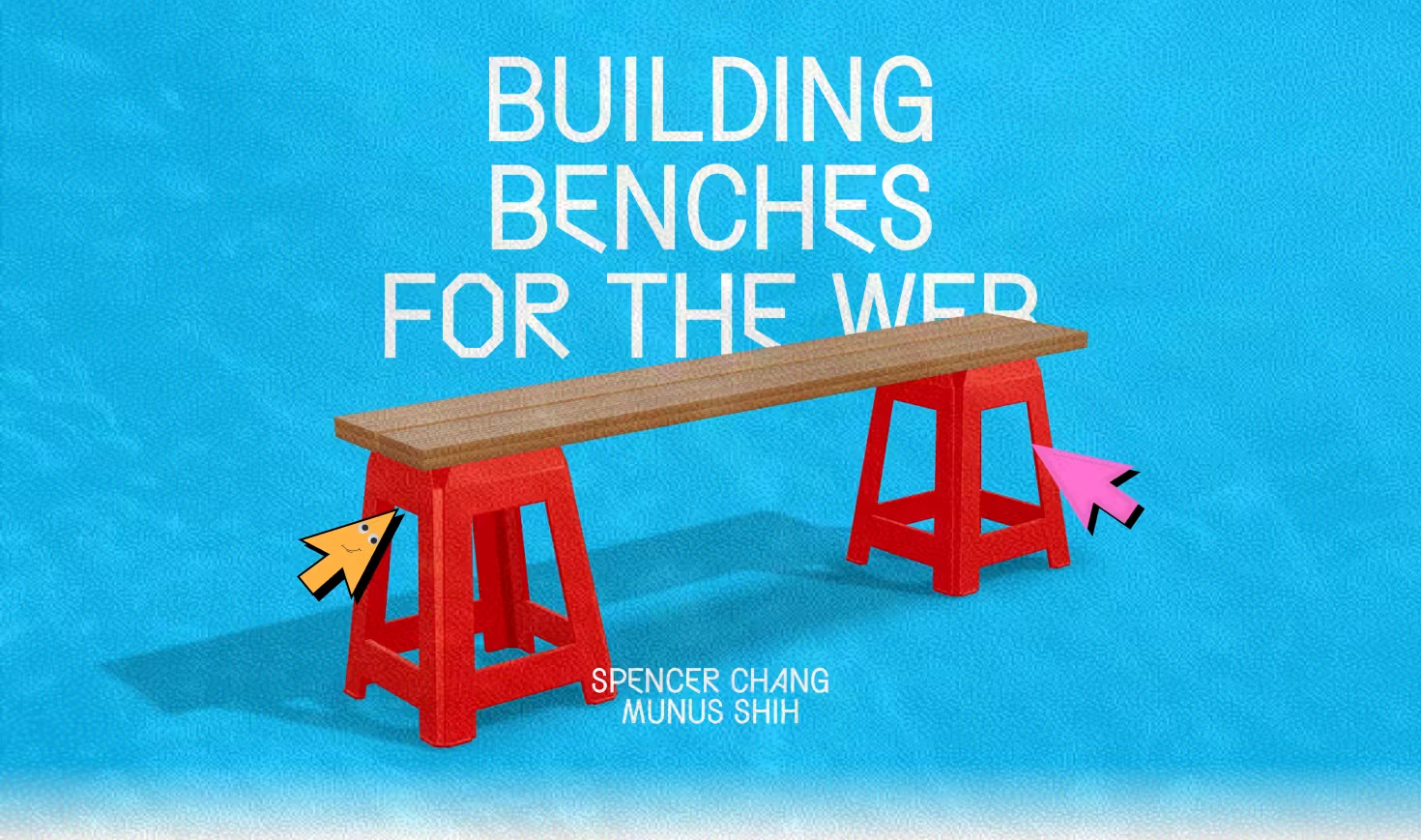
I was very pleasantly surprised by all the unique and creative ways people took it in Building Benches for the Web, the class Munus and I taught for SFPC. Liam made a message board for worms who can compost the messages, kae made a cyber hospital to bond with other people who are sick, Myla made a farmers market, Sheng Li made a freeform poetry game, Andrew made a data-conscious and personalizable video chat, and Halim made a customizable library for class resources.
I haven’t seen anyone use it maliciously yet, but I’ve had to be thoughtful about designing my own playhtml experiments so that people can’t be mean in these freeform spaces. I’ve found that designing the space in what the environment feels like and the kinds of contributions people have already submitted goes a long way.
Who or what inspired you?
Oh so many - Processing and p5.js for the community around creativity and open-source they’ve cultivated. Website hosting services like Glitch (rip), Neocities, mmm.page for giving people space and inspiration to make their own web spot. Subways, coffee shops, benches, plazas, and every public space for showing the infinite creativity people have for having fun together. Webrings, guestbooks, and transient gathering events for creating pockets of life across the web.